Composting on an industrial scale
Our expertise in designing, building and operating industrial-scale composting facilities is helping businesses manage their biodegradable waste and turn it into a valuable resource that’s better for the environment and the bottom line.
-
We manufacture premium compost from your biodegradable waste.
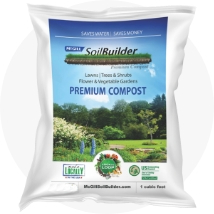
McGill is a biodegradable waste recycling company composting residuals and byproducts from industrial, municipal, commercial and agribusiness sources. These materials are used as feedstocks in the manufacture of a line of branded compost products for the professional landscape, turfgrass and erosion control markets, as well as landscape supply retailers.Our composting facilities are in Virginia, North Carolina and Ireland. -
We own six facilities and are building more.
Our composting facilities are in Virginia, North Carolina and Ireland. -
Our services include dewatering and add-ons for anaerobic digestion.
We dewater, transport and recycle all types of compostable materials and compost-compatible wastes. We also offer add-on services and technologies for anaerobic digestion and bioenergy facilities and design-build-operate (DBO) services for customer-owned composting plants. -
We compost indoors using sophisticated composting technologies.
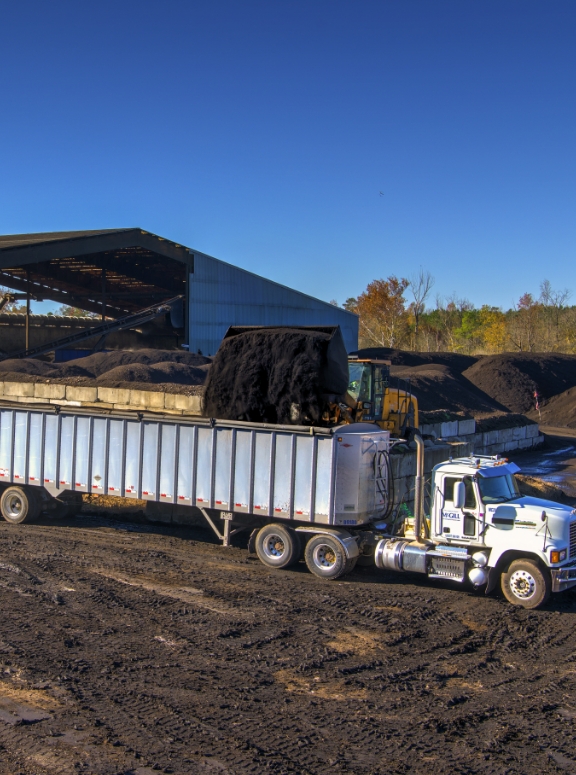
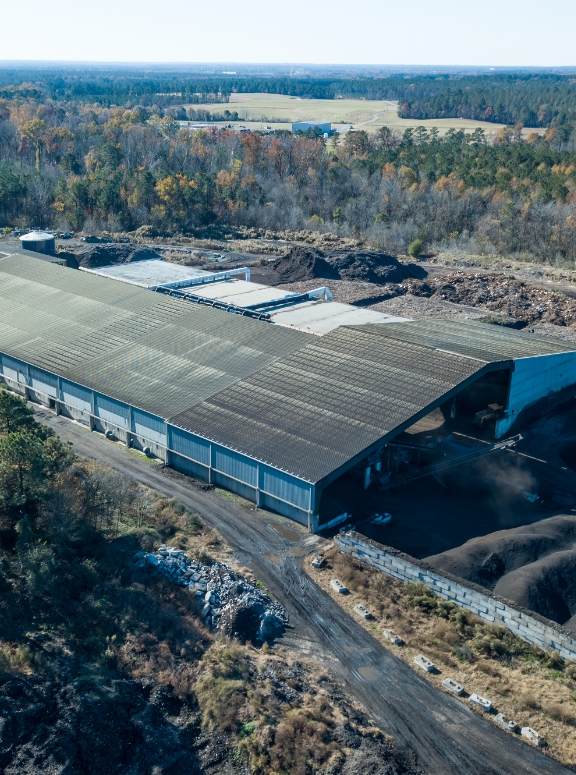
McGill operations are indoor, industrial-scale facilities using advanced systems and technologies with computerized monitoring and biofiltration. Total control over the composting environment means rapid throughput and premium compost products with proven performance and reliable consistency. Indoor operations allow us to capture all processing air for biofiltration. Biofilters mean we greatly minimize odors. -
We compost food waste, biodegradable plastics, sludge and more.
Yard waste, paper and cardboard, food waste, water treatment residuals, biodegradable plastics, pallets, sheetrock and other biodegradable materials are no problem for our process. -
Upgrading water treatment infrastructure? We can save you money.
Our process can be modified to enhance biomass reduction and drying. Why pay for energy and equipment-intensive mechanical or thermal sludge drying when microbes will do it for free? Biological systems can offer substantial savings in capital and operating costs over more traditional sludge management options.